
The data centre, the cage and the chatbot
AI inherits whatever is broken in how a country produces and keeps its law. What we learned scanning Uganda's judgments in a hotel room in 2007, and what Uganda, Tanzania and Kenya have built since.
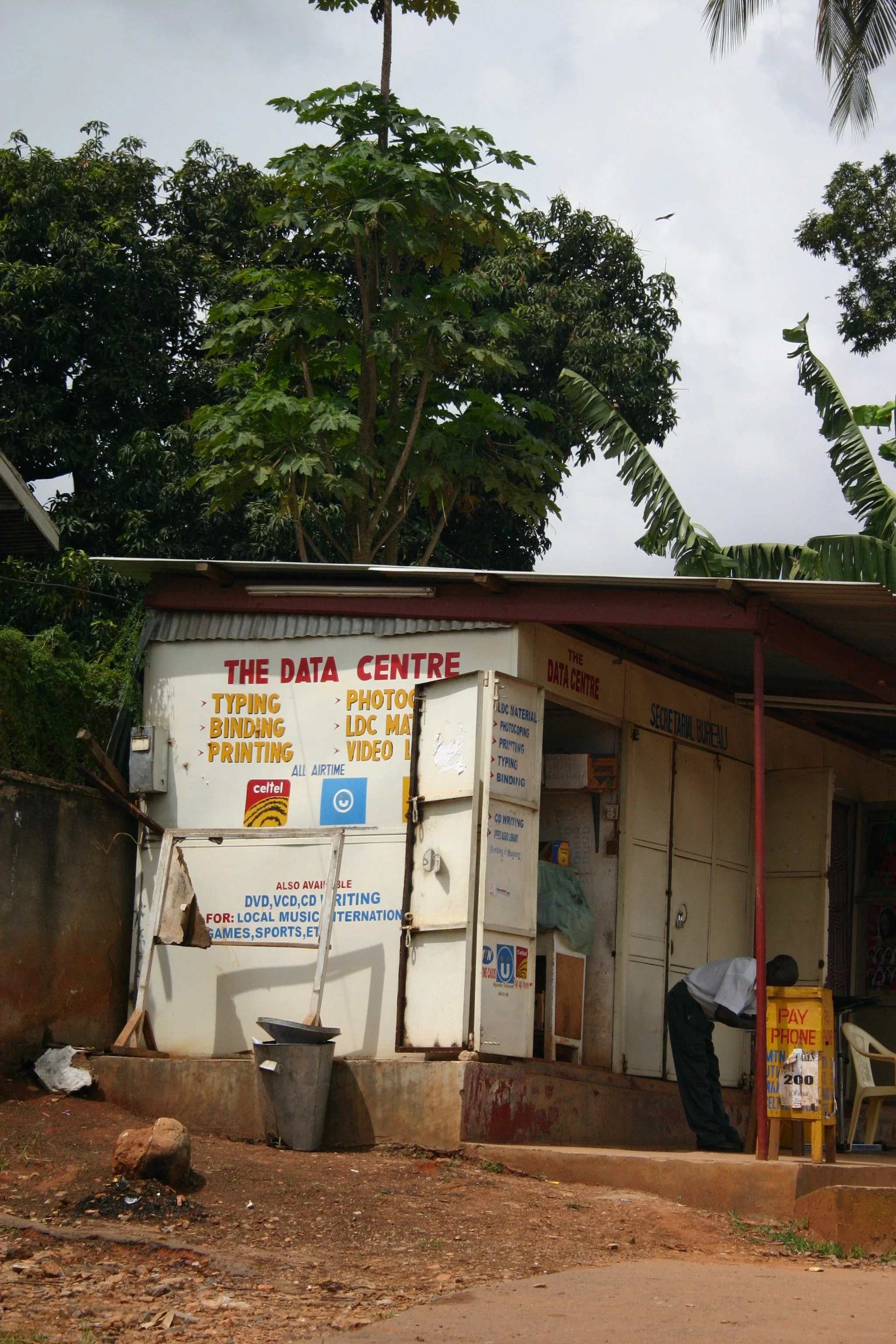
"The Data Centre", Kampala, December 2007.
In December 2007, this was a data centre in Kampala. Typing, binding, photocopying, and "LDC material" for students at the Law Development Centre.
It's a useful picture to keep in mind while so much is said about data centres, AI and the future of law in Africa. For most of the continent's legal history, the law reached lawyers, students and citizens through places like this: copied, bound and sold by whoever had a copy.
A scanner in my luggage
I was in Kampala at the start of our work with the Judiciary of Uganda to put the law online, with a scanner in my luggage. The court's judgments were in binders. We loaded them into the Judiciary car, promised the Deputy Registrar we would bring them back in two days, and scanned them in a room at the Hotel Equatoria.


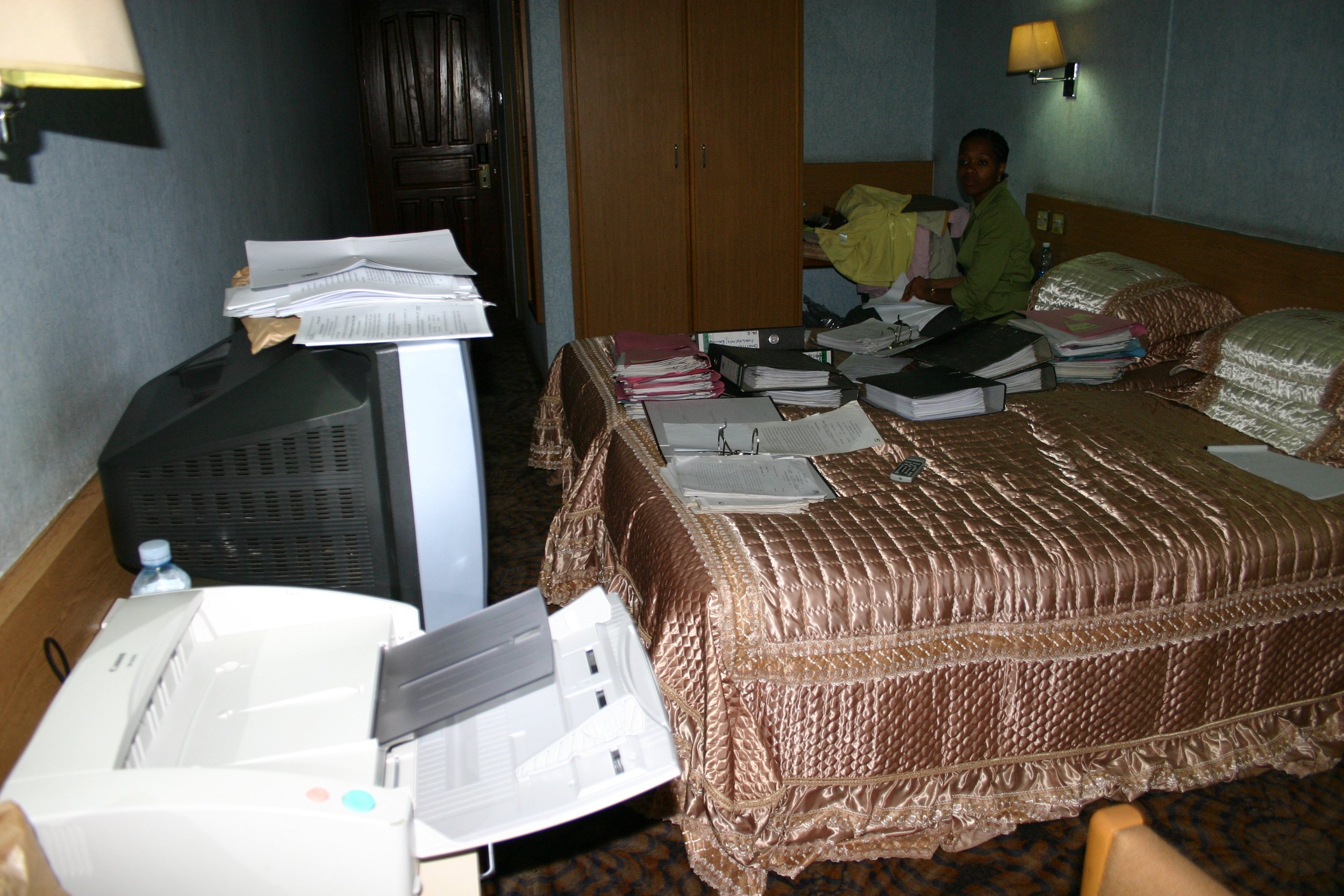

Scanning in a room at the Hotel Equatoria, December 2007.
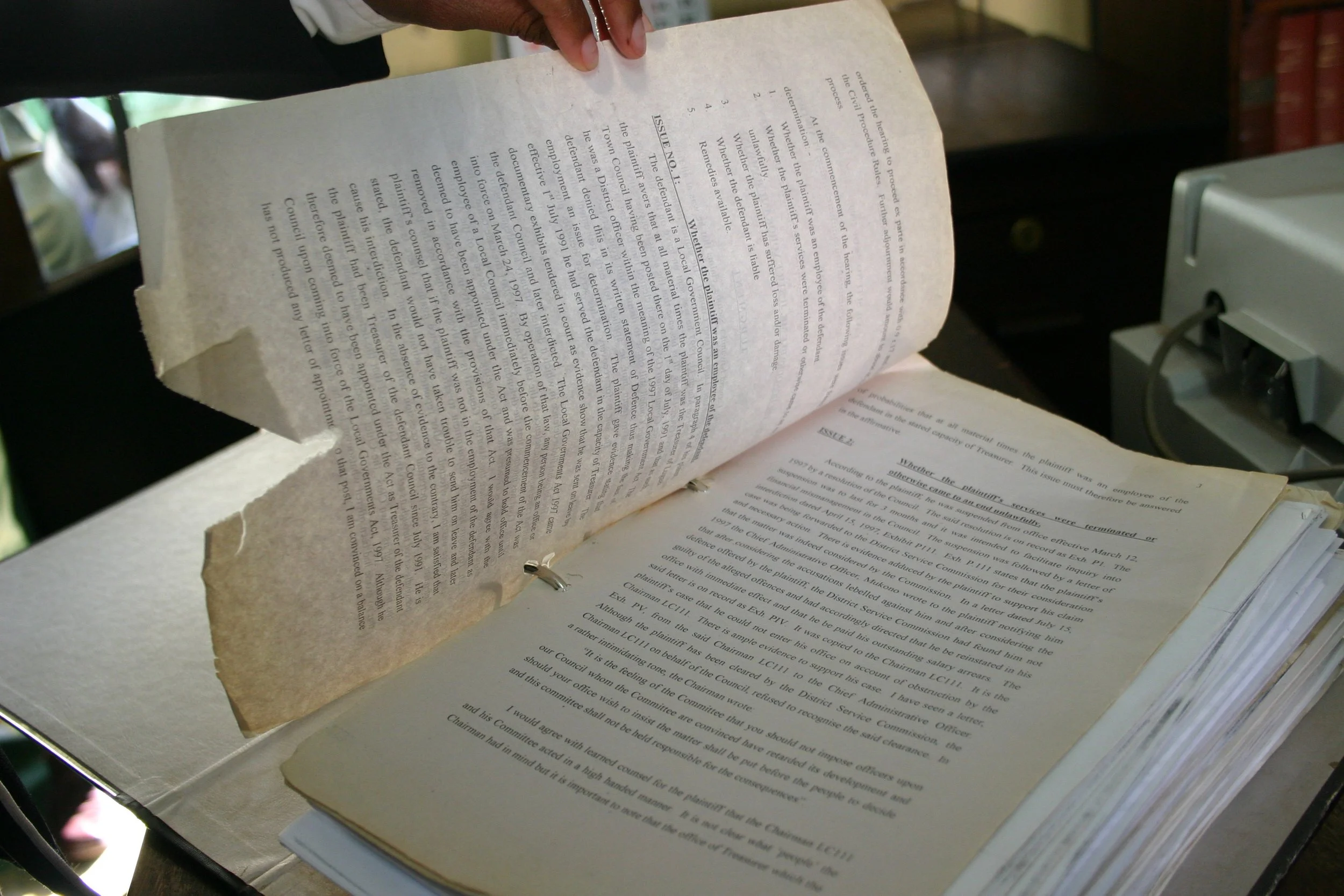
Judgments as we found them: typed, bound and fraying.
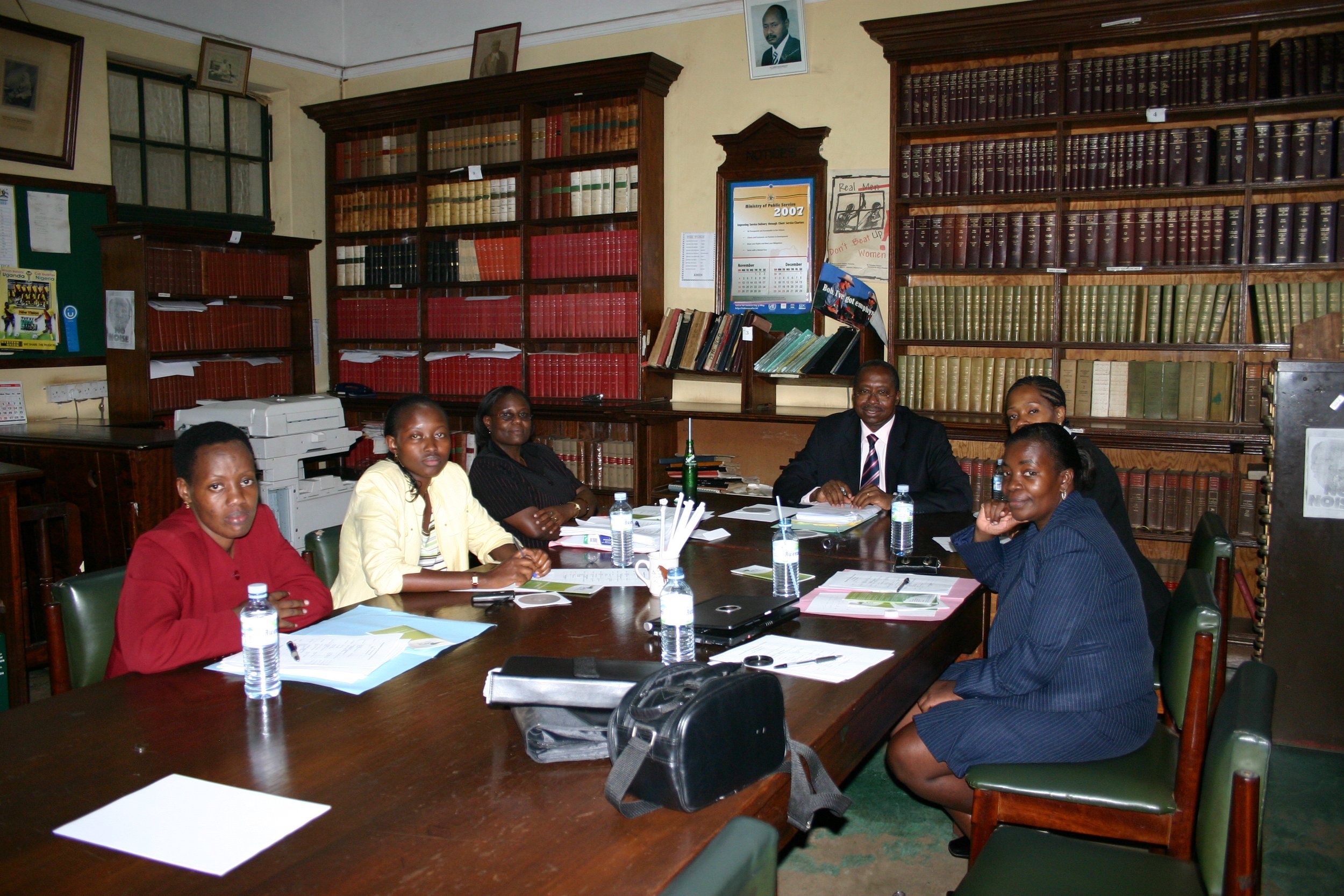
It started, as it still does, with a court trusting us with its record. Everything since has rested on that trust.
The cage
Recently, Phillip Karugaba wrote about studying law at Makerere University, when access to the law meant access to "the cage": a closed-off section in the basement of the main library where the most treasured law books were kept. Someone had cut the pages of Donoghue v Stevenson out of the law report. Only years into practice did he learn that Ms Donoghue never won damages in court.
Practice was not much easier. The larger firms bound newspapers, gazettes and legal instruments into annual volumes. Amendments were pasted into the statute books by hand and repealed provisions crossed out. Important judgments were kept in an "authorities" box file, and lawyers wrote notes in the backs of their diaries from cases they overheard in court.
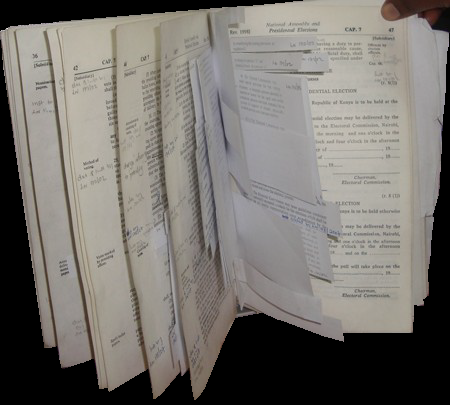
statute book with pasted amendments
Keeping the law current with scissors and glue: amendments pasted into a copy of Kenya's National Assembly and Presidential Elections Act (1992 revision).
Fluent answers, missing pages
Now a lot of AI-generated "legal insight" about African law is doing the rounds, often from people quite sure the hard part is done. In much of Africa, the law those models read is still on paper, in private collections, or in a copy of a copy. AI built on whatever law it can find carries huge risk: a scraped PDF, a law firm's annotated volume, an old consolidation passed around a lawyers' chat group. The model answers fluently. The pages are still missing. You just can't see where.
The consequences are already reaching the courts. Within a single year, South African courts twice referred practitioners to the Legal Practice Council for relying on authorities a generative AI tool had invented. In Tanzania, a judge interviewed for our TanzLII evaluation warned of lawyers citing AI hallucinations as case law where research is done without safeguards.
The chain
Sarai Chisala-Tempelhoff, my Malawian sister, named the real problem: "The challenge is not simply that Malawi needs a better MalawiLII website. The underlying issue is how legal information is produced, recorded, preserved, supplied, verified, published, updated, and maintained across institutions."
Phillip's memories match that chain almost exactly. Pages cut out of a law report are a failure of preservation. Amendments pasted in by hand are a failure of updating. Gazettes collected privately by the big firms are a failure of supply. Cases known only from what lawyers overheard in court are a failure of recording.
AI fixes none of that. It inherits it.
What is possible when institutions own the chain
Uganda. A Judiciary team uploads judgments to ULII from inside the court buildings, alongside the laws, Gazettes and Hansards. When an important judgment is delivered, ULII's Joel Wegoye makes sure it reaches lawyers' chat groups and social media, and commentators take it from there. ULII now offers AI case summaries built on the Judiciary's own record.
Tanzania. TanzLII holds more than 120,000 decisions, nearly 95% of the judgments of its courts of record, most published on the day they are delivered. Two decisions by the Judiciary did much of the work. A 2023 Chief Justice circular required judgments to be typed, proofread and available on the day of delivery. A March 2024 amendment to the Court of Appeal Rules made decisions published on the official online platform count as reported decisions. An independent evaluation found that case citation in Tanzanian judgments rose about 25-fold over the decade to 2025. The free neutral citation format went from under 5% of citations to 69%.
Kenya. Kenya Law is a statutory body whose board is chaired by the Chief Justice. Kenya's statutes had not been comprehensively revised since 1995. With the Twenty-fourth Annual Supplement in April 2024, Kenya Law brought them up to date. It now publishes the Laws of Kenya as consolidated, point-in-time data.
AI on an authoritative record
Statute books like the one in the photo are now consolidated, point-in-time data, and AI runs in our workflows and on top of it. That is the right order. When we used AI to read 19,724 Tanzanian criminal judgments for Justice in Data Report 1, the model had to quote the judgment for every claim it extracted, and the software checked each quotation word for word against the source. AI classified and extracted; people decided what the findings meant. Every figure in the report traces back to a judgment anyone can open and check.
Publishing the law is a public function
Every person is presumed to know the law. That presumption only holds if the state makes the law known. Kenya's Constitution says so plainly: "The State shall publish and publicise any important information affecting the nation" (Article 35(3)). The Montreal Declaration on Free Access to Law describes public legal information as information produced by "public bodies that have a duty to produce law and make it public."
It took years of investment to get Uganda, Tanzania and Kenya to where they are, and we still need far more to cover the continent. We believe building the capacity of government partners is the slower, and most sustainable, way.
Three questions
So if you are building AI for African law, ask first: who publishes the law you are reading, who keeps it current, and who corrects it?
If you can't answer, you haven't democratised the law. You've rebuilt the cage, with better grammar.
Read the TanzLII evidence in full →
With thanks to Phillip Karugaba and Sarai Chisala-Tempelhoff, whose words started this post. Photos: Kampala, December 2007.